Where the ladder comes from
The curriculum is adapted from a published three-part speech-therapy workbook series ("Sentence Maps," including the "Cat Says Meow" set), using PCS/Boardmaker-style symbols as its original visual language. Numbering is continuous across the three source workbooks: Part 1 covers Maps 1–5, Part 2 covers Maps 6–10, and Part 3 covers Maps 11–15.
ALPINE adapts the workbooks' pedagogical structure — the sentence frames, the grammar targets, and the progression between them — into an interactive, errorless tablet experience. The worksheets themselves are never reproduced or shipped; every tile, pictogram, and photo in the app is either an ARASAAC symbol (CC BY-NC-SA, attributed) or an image made for them specifically. The source material had no built-in teaching method, no prompting hierarchy, and no mastery criteria — the errorless-teaching approach, the nudges, and the advancement criteria described below are ALPINE's own design, developed with their speech-language pathologist (SLP).
Maps 1 → 15
Each map holds a single sentence frame and a single new grammar target — one change at a time. Maps are grouped into three parts that build on each other. Every screenshot below is the real builder screen for that map, captured from their tablet — tap any screenshot to see it full size.
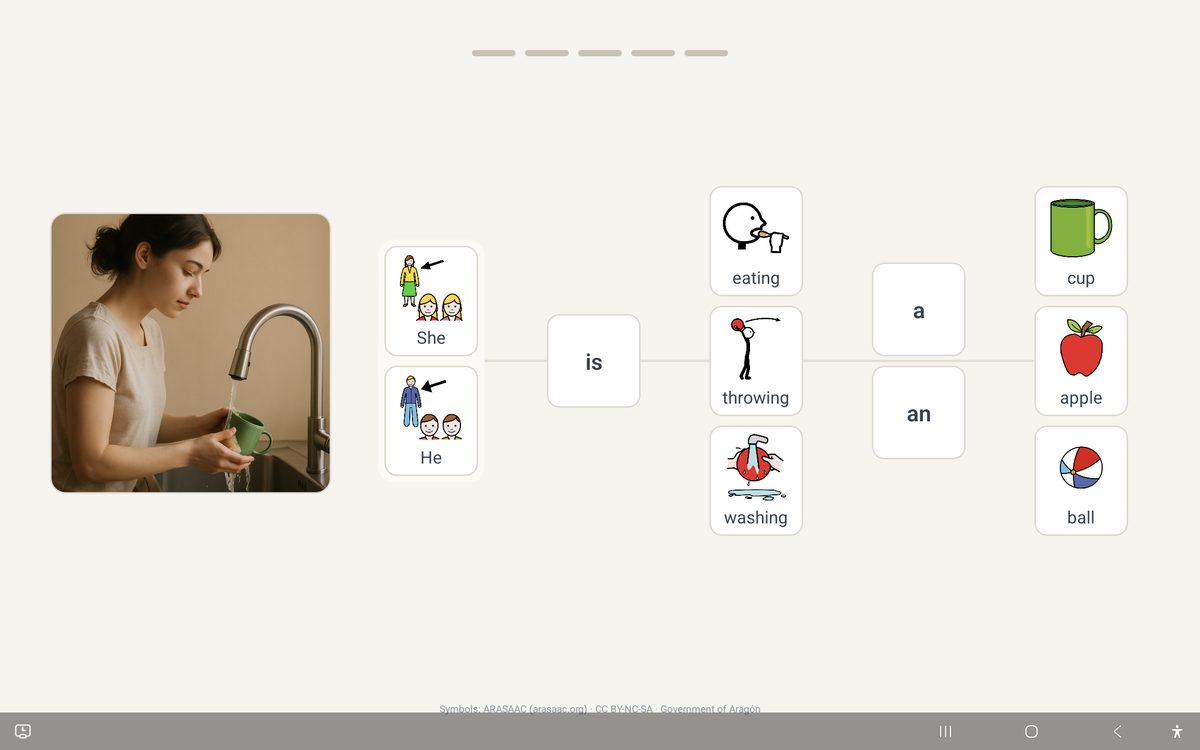
"She is throwing a ball"
SVO, present-progressive — a/an by first sound
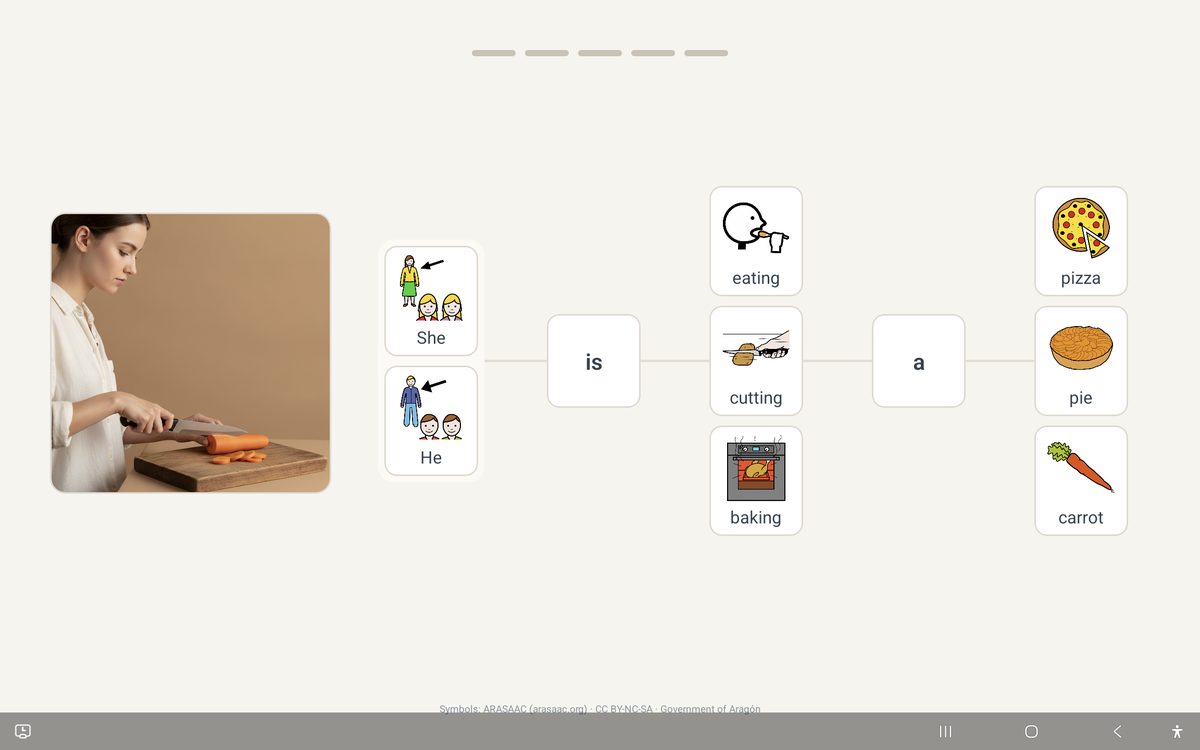
"He is baking a pie"
Same frame, food words, plain "a"
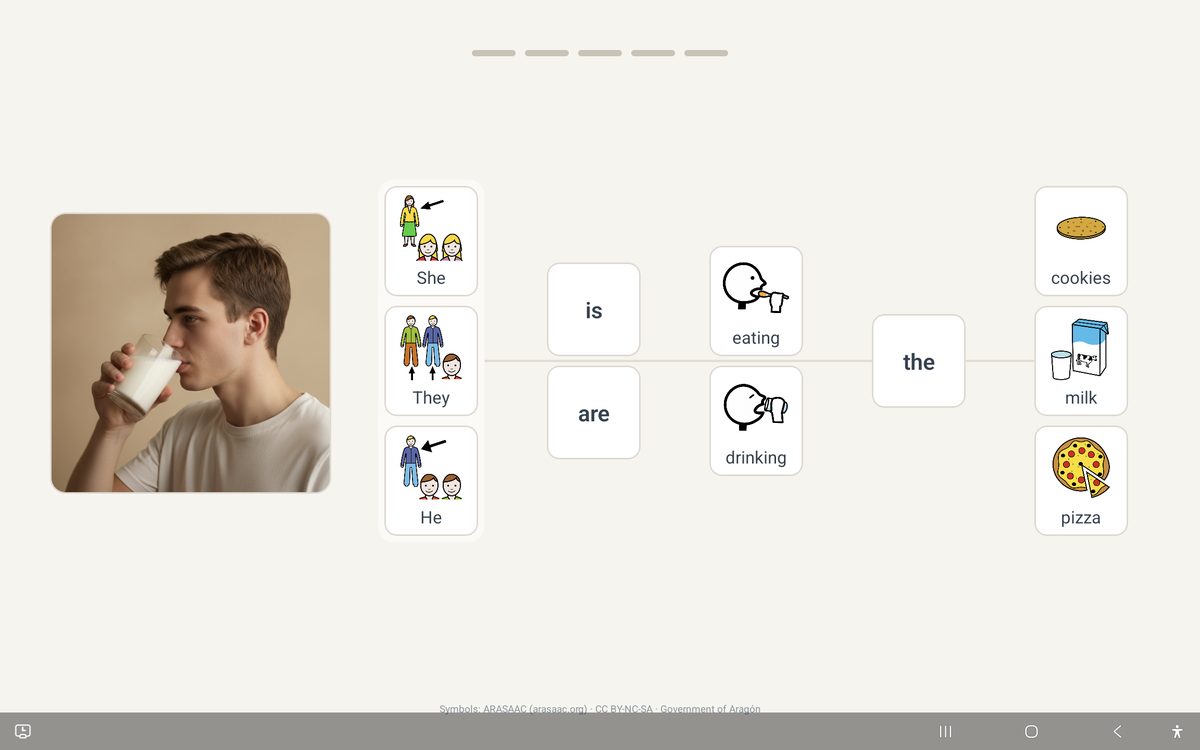
"They are drinking the milk"
First is/are agreement, plus "the"
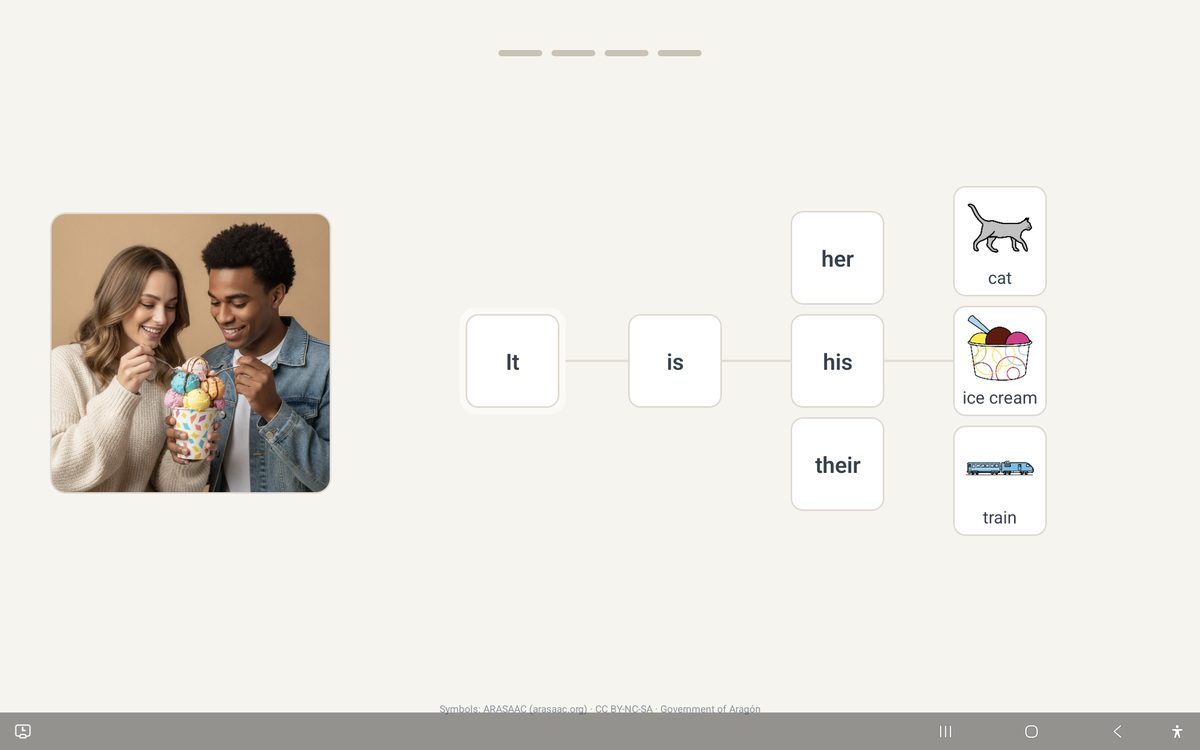
"It is their train"
Possessive pronouns — no article
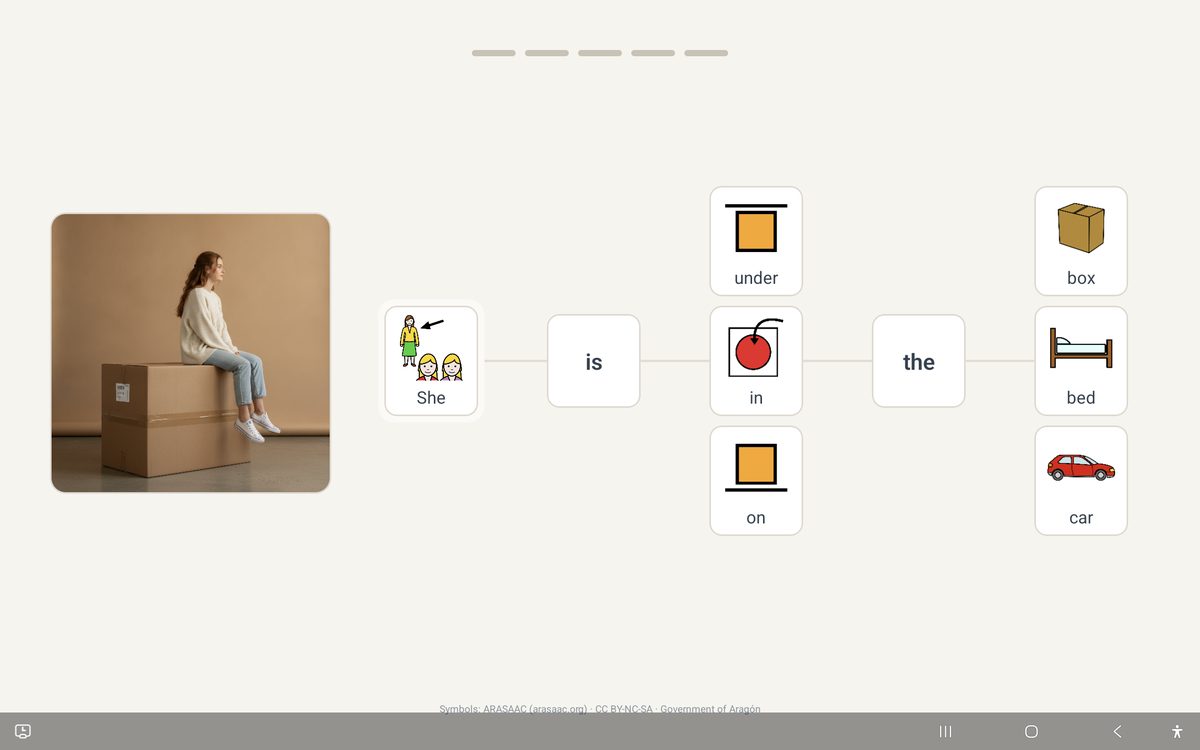
"She is under the box"
Spatial prepositions — under / in / on
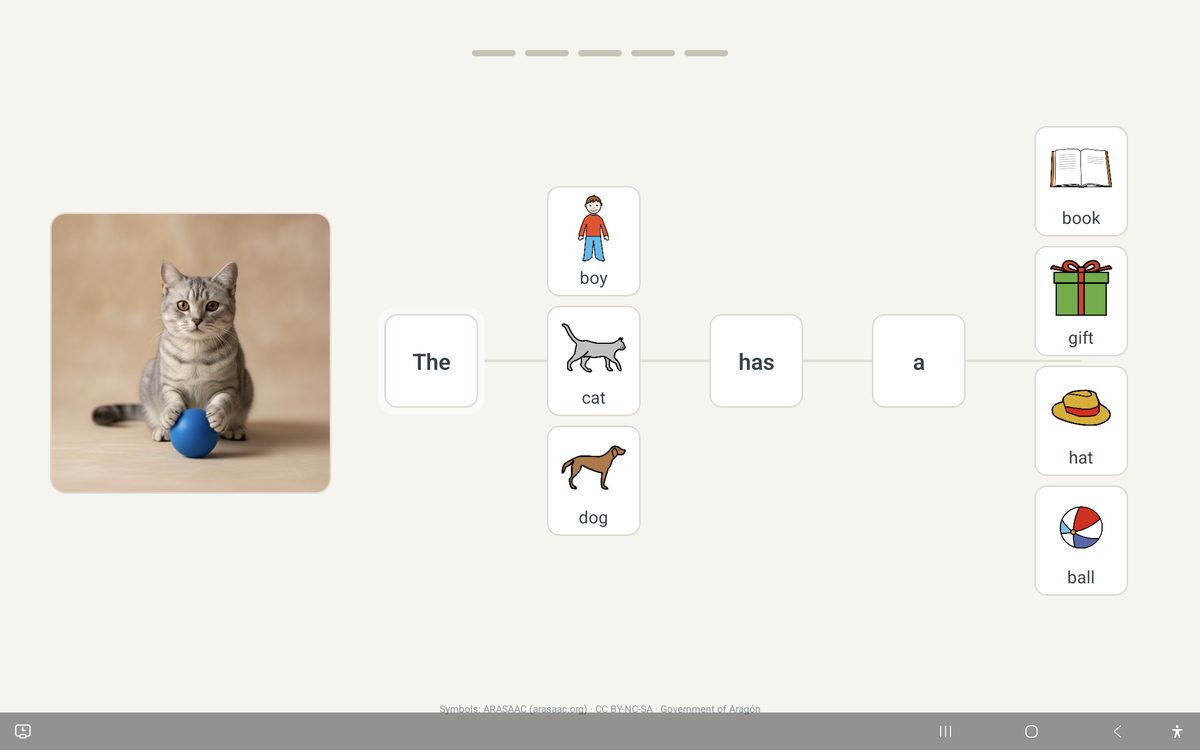
"The dog has a gift"
"Has"-possession — noun subjects
Adjective-before-noun
Pending an SLP colour-scheme decision — not on the tablet yet
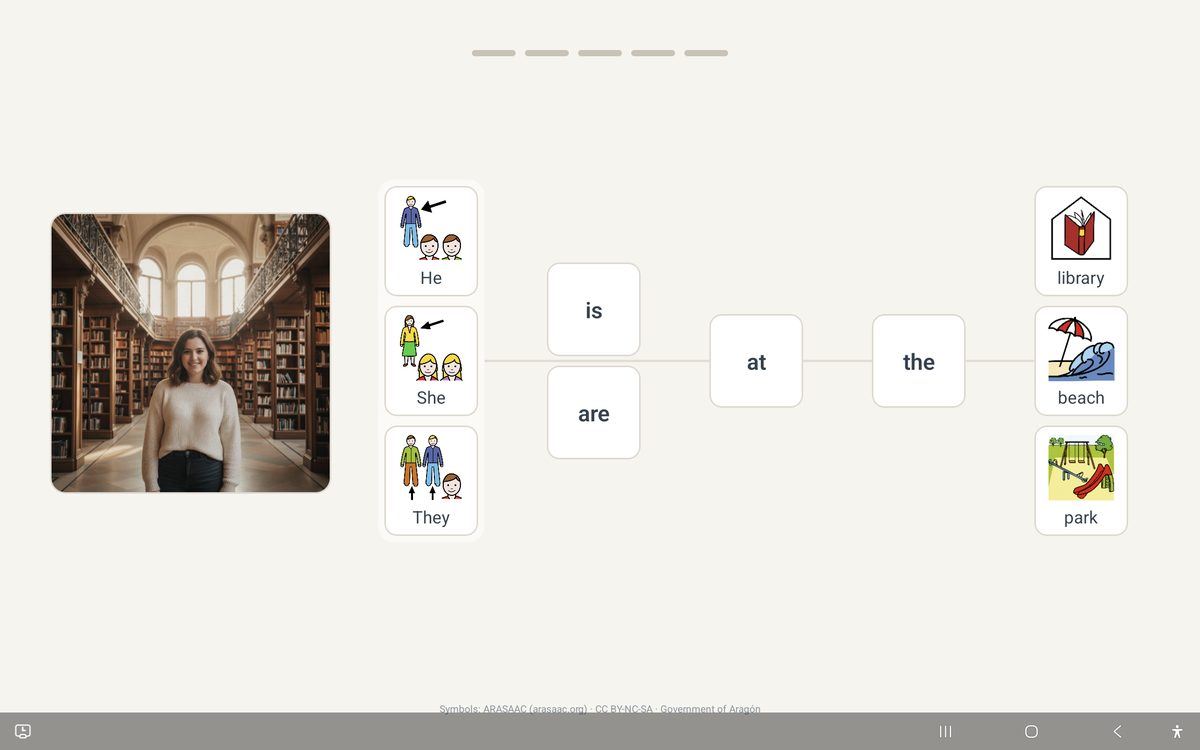
"They are at the beach"
is/are agreement + locative "at the"
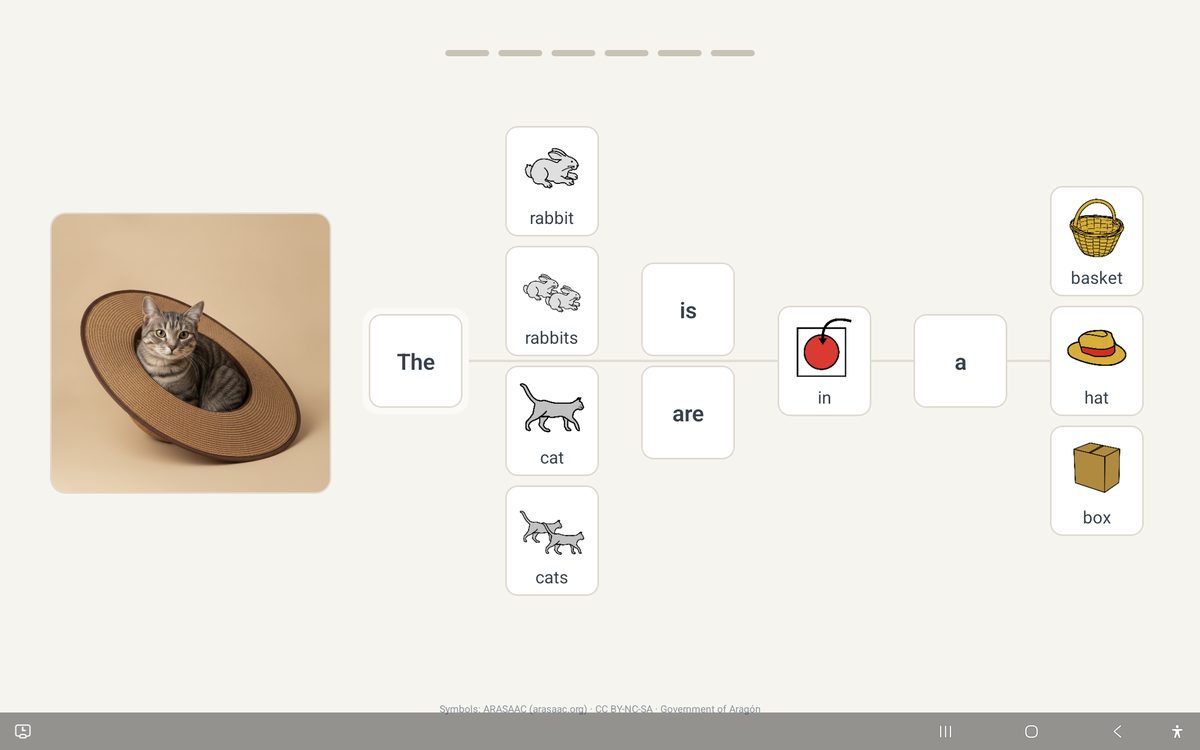
"The rabbits are in a basket"
Agreement keyed to noun plural "-s"
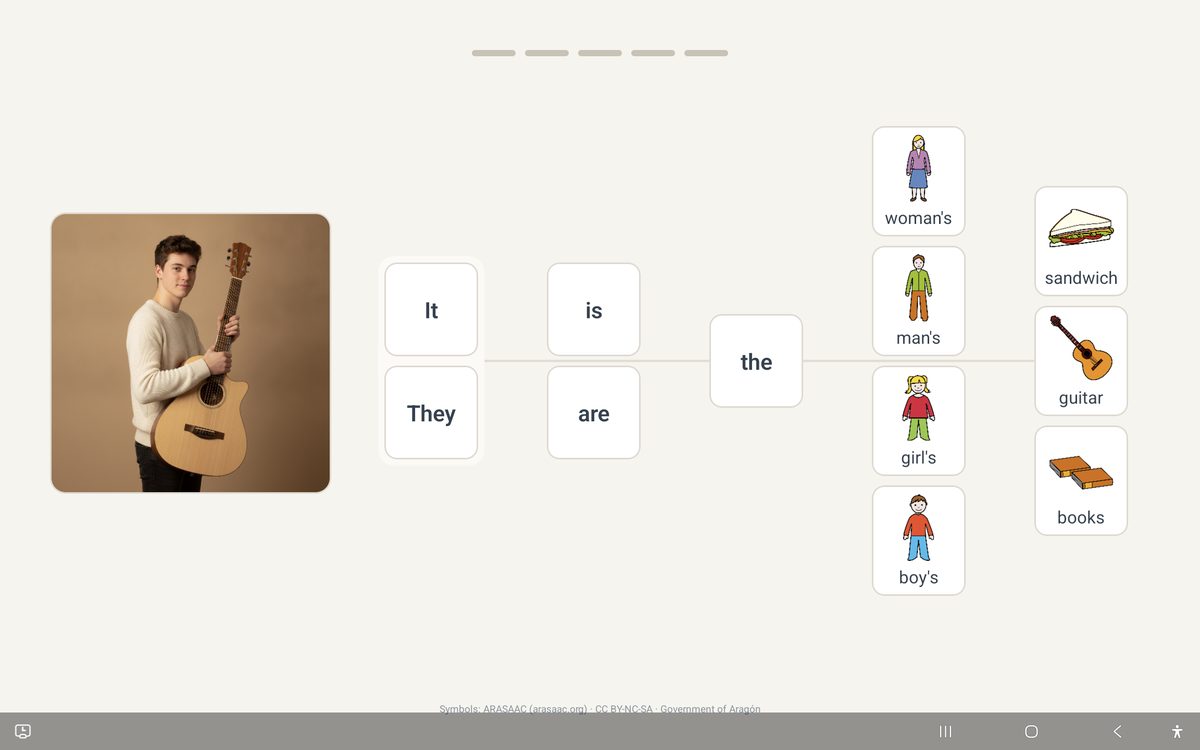
"It is the woman's sandwich"
Possessive "'s" morphology
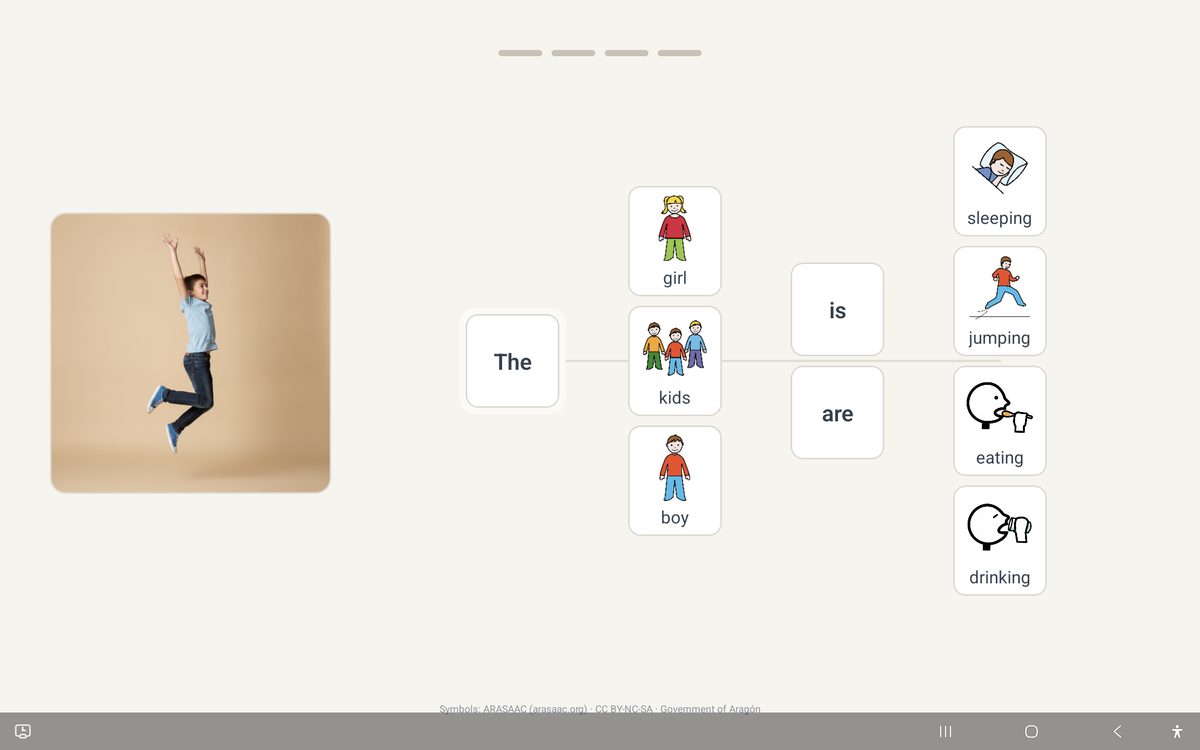
"The kids are jumping"
Agreement, mixed singular/plural, no object
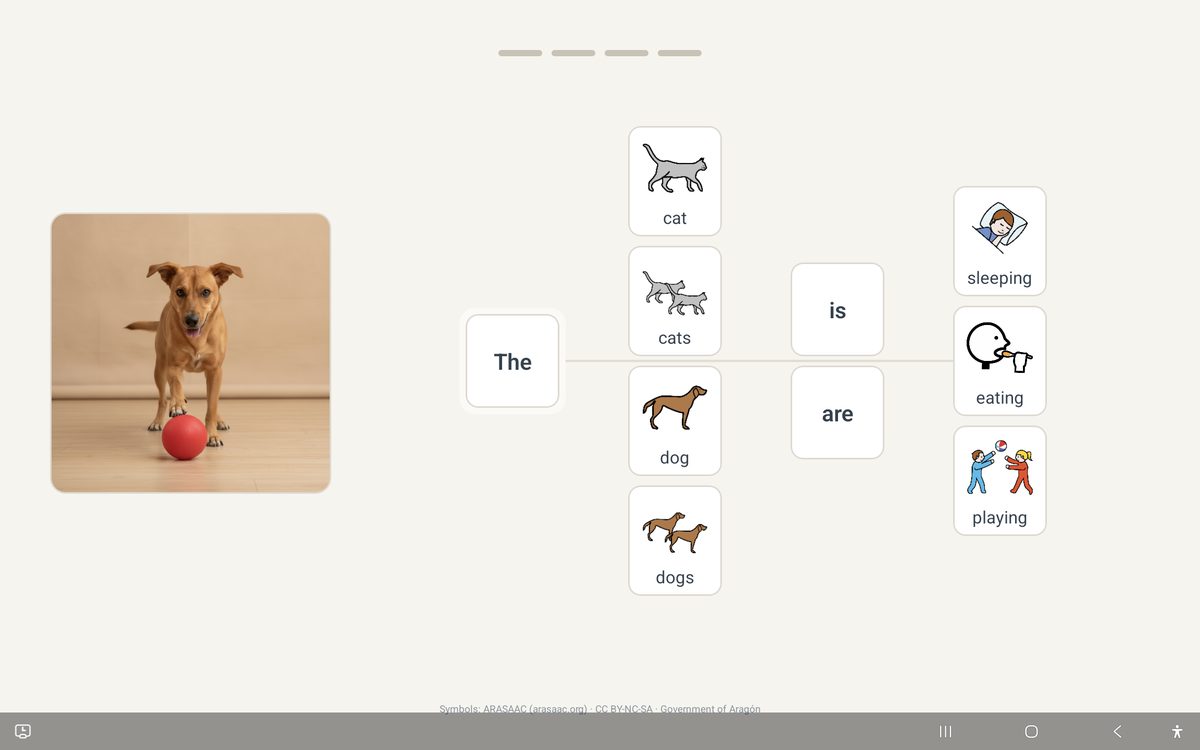
"The dogs are playing"
True plural minimal pairs (dog/dogs) vs is/are
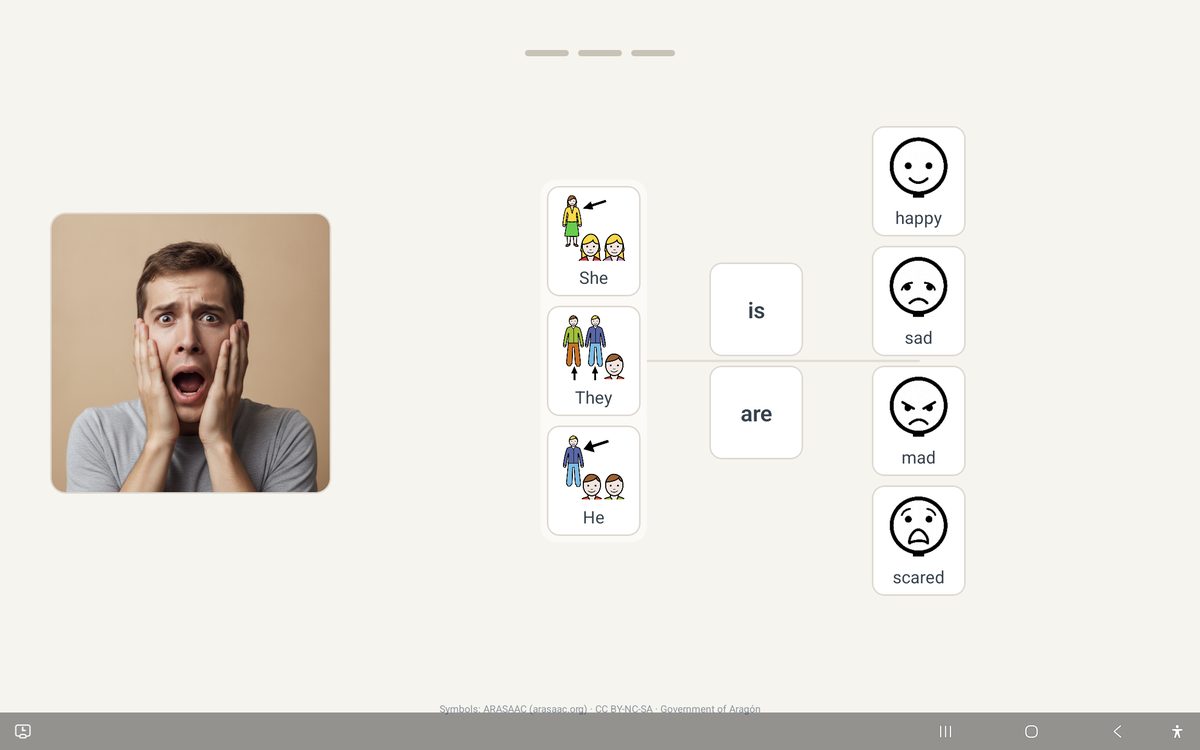
"She is happy"
Emotion adjectives — no noun
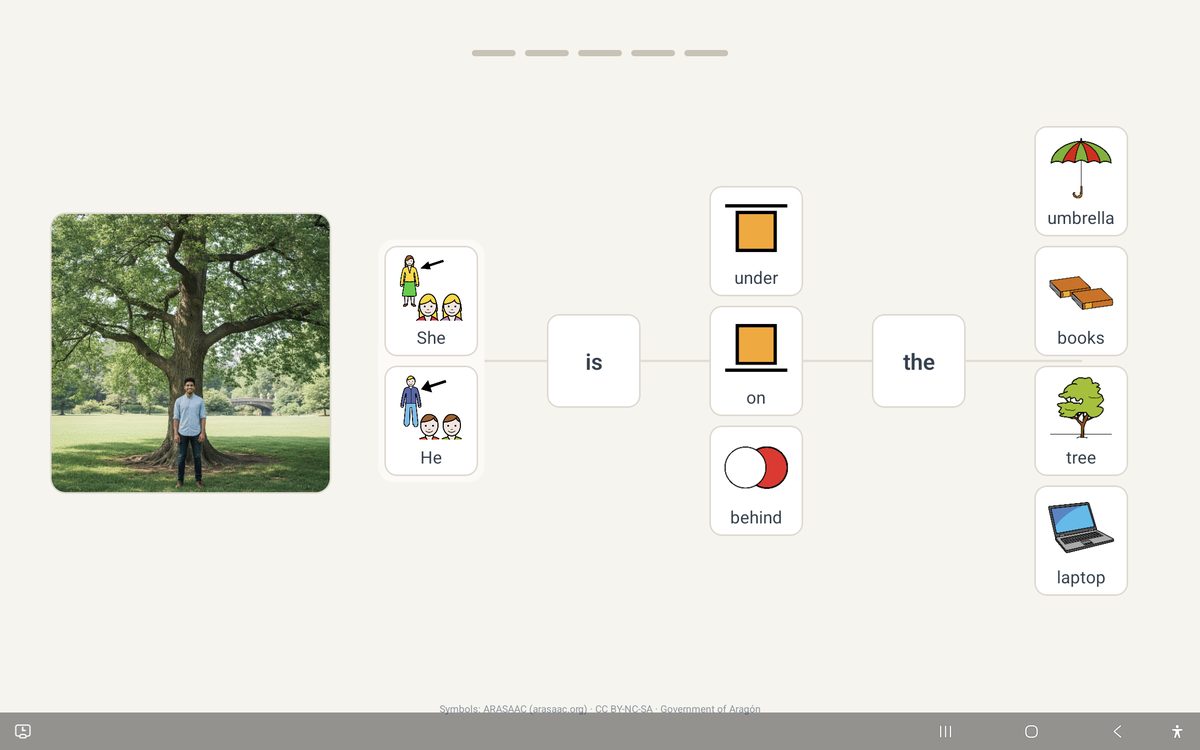
"She is under the umbrella"
Prepositions, including "behind"
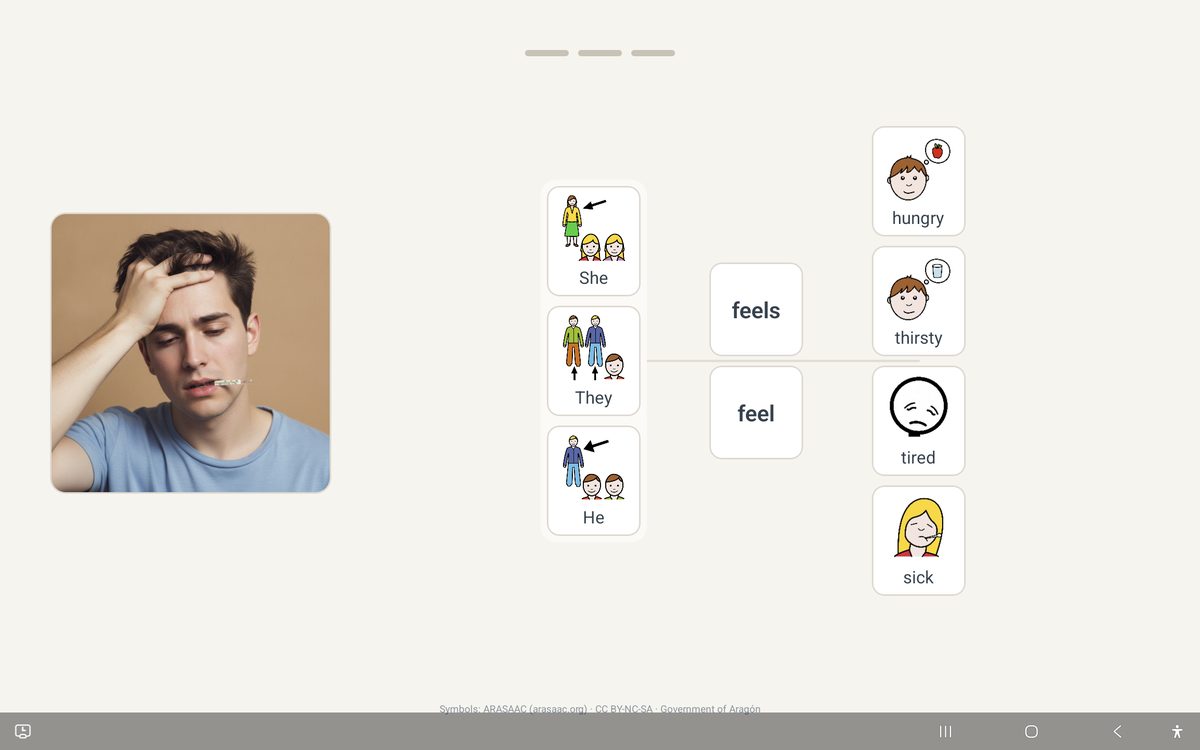
"They feel hungry"
Lexical-verb "-s" agreement ("feel/feels")
How advancement works
ALPINE never auto-advances them to a harder map. Moving them from one map to the next is always an adult decision, made through the hidden adult gate (press and hold the small grey attribution line for two seconds), usually together with their SLP.
The app supports that decision with evidence rather than making it: a default reference criterion of about 90% independent sentence-builds across three sittings, on at least two different days, phrased as evidence to review — never as an automatic verdict. The criterion itself, and the pace of moving through the ladder, is SLP-configurable. See For clinicians for the full measurement model behind that evidence.
Episode 4